Category Archives: Exercises: Declarer Play

Rectifying the Count

Posted on by 0 comment

What’s usually referred to as “counting the hand” might better be termed visualizing the unseen hands. Experts don’t count. They rectify hand patterns from clues during bidding and play. Once they have done that, they have “gotten a count on the hand” or “rectified the count”, meaning they have deduced shapes of unseen hands.

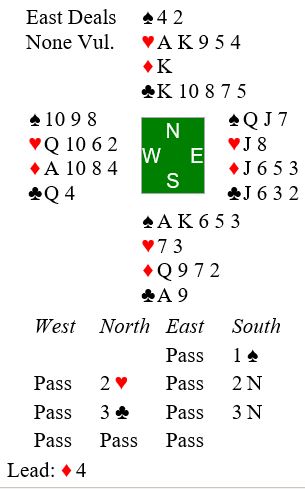
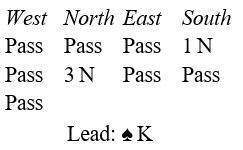
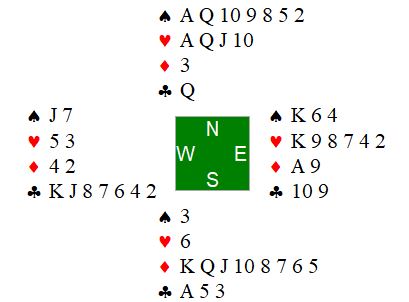
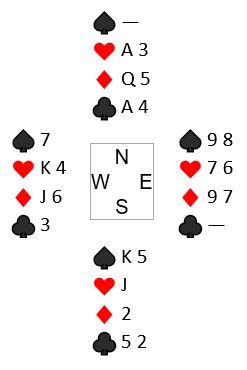
Here is a nice declarer play exercise in visualizing hand patterns by Eddie Kantar*.
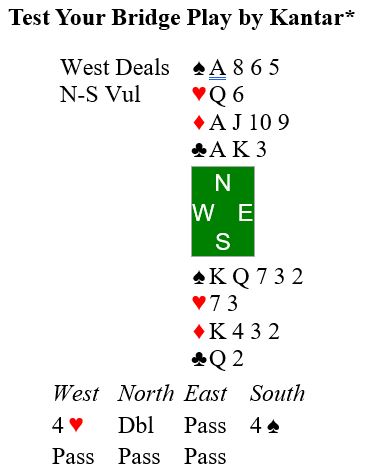
kantar1

Follow the first eight tricks:

  1. West cashes the ace of hearts, East playing the nine
  2. West cashes the king of hearts, East playing the five
  3. West play the nine of clubs, East playing low, you win the queen
  4. You cash the king of spades, West discarding a heart
  5. You cash the ace of spades, another heart from West
  6. You cash the queen of spades, another heart from West
  7. You go to the king of clubs, West following low
  8. You cash the ace of clubs, West discarding a heart while you discard a low diamond

Tell me the hand pattern West started with? How many diamonds did East start with? How are you going to play the diamonds?

Were you able to “rectify the count” after trick eight?

*https://www.amazon.com/Test-Your-Bridge-Play-2/dp/1554947758

Scroll down for the answer if you need help:


At trick 3 you know that West started with 7 hearts, East with 2 hearts.

At trick 4 you discover that West started with zero spades, East with 4 spades.

At trick 8 you discover that West started with 2 clubs, East with 6 clubs.

Now you can rectify the count: West started with zero spades, 7 hearts, ?? diamonds, and 2 clubs. How many diamonds did West start with? How many diamonds did East start with? Hint: All four hands contain a total of 13 diamonds.

Now you know how to play the diamonds.
Recommendations to help you think like a bridge player

Posted on by 0 comment

When it comes to solving the mystery of visualizing unseen hands, World Champion Mike Lawrence’s books and software provide the best guidance I have encountered. Here is Mike’s website: http://michaelslawrence.com/

Here is a fine example one of his books:

http://michaelslawrence.com/product/how-to-read-your-opponents-cards/

I benefited immensely from this software back in the late 90s: http://michaelslawrence.com/product/counting-at-bridge-2-cd-for-pc-only/

Mike gives us daily puzzles to help improve our game. Go to his BridgeClues site: https://www.bridgeclues2.com/ to enjoy and learn.


Counting your tricks in no trump

Posted on by 0 comment

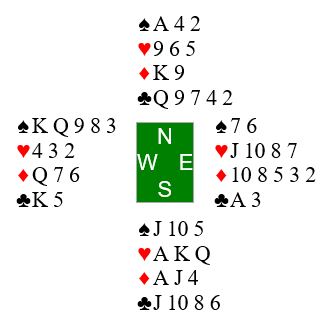
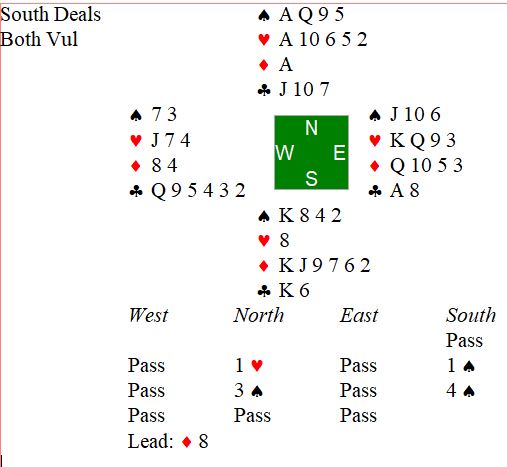
Here is a hand I observed recently on BBO:

Counting in NT

Put yourself in the South seat. It looks like you have two fast tricks in spades, two in hearts, one in diamonds (your singleton king wins at trick one), and two in clubs. You need to set up two additional tricks. It looks like diamonds are splitting 4-4, and that you will lose three diamond tricks. You have seven card fits in each of the other suits. What’s the best way to set up a ninth trick? Give it some thought and scroll down for my recommended plan.


You can hope for a 3-3 split in spades, hearts, or clubs. But clubs offer your best chance. Look at those nice intermediates that you posess in clubs: 10, 9, 8, 7 . Win the ace of clubs and return the nine, planning to overtake if West plays an honor. That will work whenever clubs break 3-3 or you catch West with a doubleton honor. It’s the doubleton honor that gives you a slight extra chance in clubs. Also, you will hold your loss to down one when clubs don’t behave.

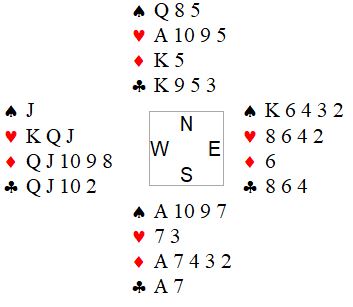
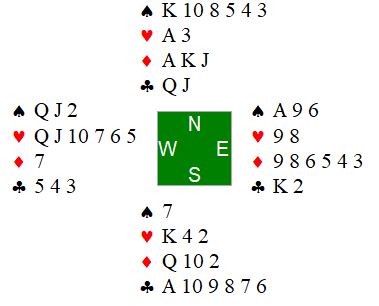
Here was the entire hand:

counting in NT too


Counting your tricks for no trump

Posted on by 0 comment

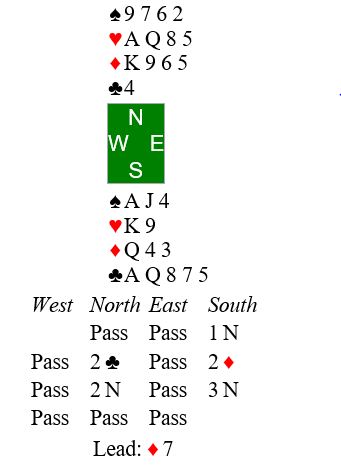
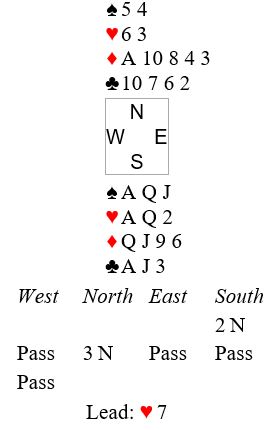
Here is a hand I observed on BBO. Opening lead is the seven of diamonds. You play low from dummy and East plays the 10. Put yourself in the South seat and plan the play:

MikeL6

Where are your nine tricks going to come from? You count one spade, three hearts, one diamond, and one club. You need three more tricks. A successful club finesse would get you one more trick.

How about the diamonds? It looks to me like you are almost assured of three diamond tricks. Do you agree with me? If so, how are you going to play the diamonds? Give is some thought and then scroll down for the answer.


By “rule of 11” West almost certainly has the ace, jack, and eight of diamonds. Win the queen of diamonds and play a low diamond. That will insure that you get three diamond tricks before your ace of spades is dislodged.

Think before you play to trick one

Posted on by 0 comment

This is a recent hand on BBO where I let my instincts takeover. I made the common mistake of failing to think at trick one, and I went down in a cold contract. Opening lead is the five of hearts. What do you think I should have done?

MikeL1

Put yourself in my shoes and decide. Then scroll down to make sure you got it right.


I managed to go down because I overlooked the almost certain location of the king of hearts. I should win the ace of hearts at trick one, club to the ace, ruff a club, and lead the queen of hearts. If RHO ducks I pitch my last club and likely make 11 tricks. If RHO plays the king, I ruff high and lead a top trump, losing only one club and ace of diamonds.

How to Visualize a Hand

Posted on by 0 comment

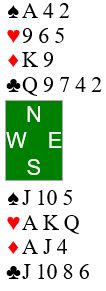
I am dipping into How to Play Card Combinations by Mike Lawrence. There is a nice lesson in visualizing possibilities from his 1st hand:

MikeL7

MikeL8

The play looks easy if West is leading from a 4-card suit. You will drive out the two top clubs and make nine tricks.

But what if West is leading from a 5-card suit? That would mean East started with two spades. If so, what is the danger and how should you play the spades? You have two sure spade stoppers (right?), and you don’t want West to get in once they are exhausted. Say you win the opening lead in dummy and start the clubs. East wins and returns a spade to West’s queen. West then plays another spade, setting up his two remaining spades. You are safe if East started with the ace, king of clubs, but you are going down if West has one top club honor. How about the possibility that West started with the two top club honors? West would have opened the bidding with A,K of clubs the K,Q five times of spades. Your worry is the real possibility that West started with one of the top club honors.

If you duck the opening lead, you will still have two spades stoppers. After the second spade, East will not be able to hurt you when he gets in with a top club. When you work all that out you duck the opening lead!


Here is the entire hand:


MikeL11


Play Bridge with Mike Lawrence*

Posted on by 0 comment

*Title is same as that of book by Mike Lawrence

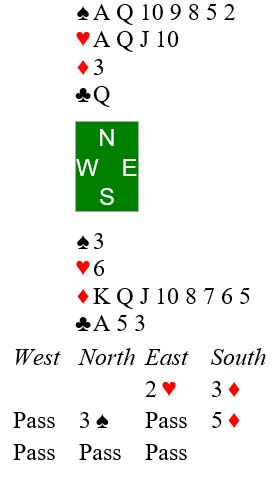
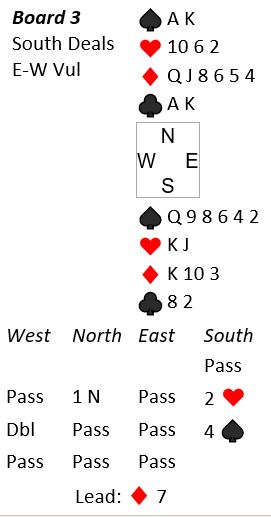
Here is an interesting hand in which Mike Lawrence shares his thinking. Mike is sitting South.

MikeL17

The transfer did not get accepted after the lead directing double because (by partnership agreement) North held fewer than three spades. Mike decided to bid game with the known 8-card fit.


Opening lead was the seven of diamonds, and East won with the ace. What diamond did Mike play from hand at trick one and why does it matter?

Tackle this question first in the comments, and I then will have more insights from Mike Lawrence on this particular hand.


Declarer Play Fundamentals

Posted on by 0 comment

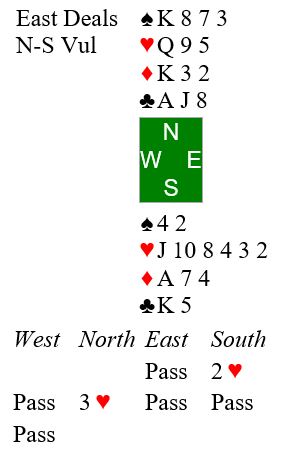
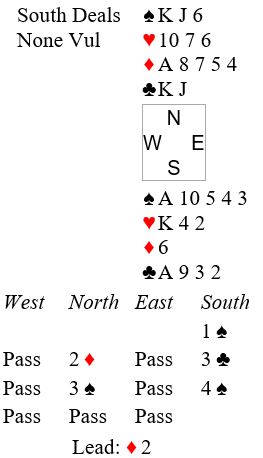
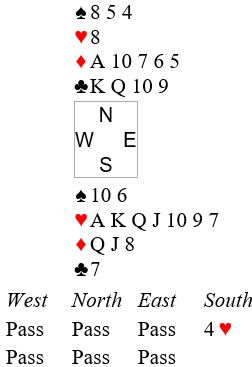
You are South in a contract of three hearts. Here is the auction and what you see after opening lead of the queen of diamonds:

play puzzle1

Counting losers like a good declarer, you see two spades, two hearts, and one diamond. You can hold your spade losers to one if ace of spades is onside. How about the diamond loser? East has gotten off to a good lead.

Noticing your combined holding in clubs, you win the ace of diamonds. Then cash the king of clubs and low club, finessing the jack. If the finesse wins, you have a parking place for your diamond loser on the ace of clubs. If the finesse loses, your spade king is protected from attack. Also, you can win any diamond lead and still park your remaining diamond on the ace of clubs.

BTW, I don’t recommend opening two hearts vulnerable with the South hand. South does not have the necessary five playing tricks (within three tricks of making contract when vulnerable). South was lucky to find North with an opening hand and queen-nine third of hearts.

An interesting double dummy problem

Posted on by 0 comment

I was going to include this hand in my “think before you play to trick one” lessons. But I played it so badly that I cannot bear to show you my errors. I was in five diamonds and managed to go down one.

Interestingly, however, the hand can make six diamonds against any defense. It’s a fun double dummy problem. You are South in six diamonds: Here is the hand:

double dummy 6D

Your mission is to make six diamonds.

Well known bridge teacher Buck Buchanan is convinced (and I agree) that solving double dummy problems “can make you a more resourceful declarer or defender when tough hands come up”. Give this one a try.

Do you see how to make seven tricks?

Here is an interesting hand I observed on BBO. You are on lead, hearts are trump, and you need to take the remaining seven tricks. Here is the layout:

seven tricks

Can you do it?

Category: Exercises: Declarer Play | Tags:

A Sure Ten Tricks?

Posted on by 0 comment

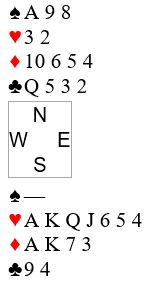
Here is a somewhat contrived example of “sure tricks” by George S. Coffin. (Contrived because the bidding is unrealistic given the unbalanced nature of the hands.) It nonetheless gives you an interesting and counterintuitive declarer play puzzle to solve. How are you going to bring home 10 tricks?

coffin4

South opened the bidding one heart, and West overcalled two clubs. Partner and right-hand opponent both passed. South bid four hearts, ending the auction.

The play started with West cashing the Ace and King of clubs, East discarding a low spade on the second club. At trick three West led the 10 of hearts on which East discarded another spade! Where is that certain 10th trick coming from? Over to you:

Play for the Overtrick

Posted on by 0 comment

From a recent hand on BBO: You are South in four spades. West leads the queen of clubs. Here is your hand and dummy:

overtrick6

It looks like you will make at least five spades. But you are playing a pairs game (which means matchpoint scoring), so it would be nice to make six. How are you going to play for 12 tricks? Hint: Note that West overcalled 2 ♥ in direct seat.

Double Dummy Puzzle from Hell

Posted on by 0 comment

Update 6/6/20: I have solved the puzzle! It turns out that Bridge Composer Double Dummy app knows that West would never be so silly as to open the queen of diamonds. 12 tricks are there on opening lead of the diamond queen.

I will offer my solution after you’ve worked a bit to solve it. Here is the original post from June 5th:

Here is another one from George S. Coffin. This one seems impossible to me. I ran it thourgh my Bridge Composer double dummy software to see if that app found a solution. It did not. So, either Coffin made an editorial or compositional error or he craftily outwitted the software and me. Which do you think it is?

You are in Six No Trump with the queen of diamonds opening lead.

coffin3

Coffin gave some hints as to what he had in mind:

  • Win the king of diamonds on opening lead and start spades with the queen. East cannot productively cover, so her hand becomes irrelevant. You must be careful to play the spade nine under the queen. When you continue with the spade eight and follow with the spade seven in hand, note West’s discard.
  • From there you continue spades, watching West’s discards, and you will be able to set up two additional tricks in one of the other suits. That part was easy.
  • Then he says you will be able to set up an additional trick in another suit as you continue the squeeze. This is what I found to be impossible. I could not squeeze West when leading from dummy, because I had to discard from hand before West chose his discard.

Maybe you can find a way around that. Good luck.

Email me or put a note in the comments when you would like the solution.

Another Puzzle from Long Ago

Posted on by 0 comment

Here is a shorter puzzle from George S. Coffin:

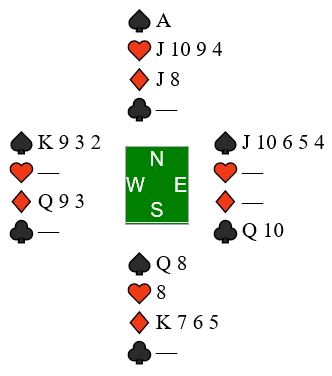
You are South and and the lead is in your hand. Your challenge is to take the last six tricks:

coffin2


How and when are you going to make best use of your clubs?

Category: Exercises: Declarer Play | Tags:

Good Bridge Puzzles from Long Ago

Posted on by 4 comments

I have been dipping into an old book by George S. Coffin, Sure Tricks (2nd edition, 1950). Our copy once belonged to H. Kunimura (any of you recall that name?). Somehow the club obtained it over the years. I googled and was surprised to find the book listed at Amazon: https://www.amazon.com/Sure-tricks-George-S-COFFIN/dp/B000M8HNSC

It contains lots of fun double dummy puzzles. Also play problems in which you are challenged to make your contract by visualizing the worst possible lie of opponents’ cards (thus the title of the book: Sure Tricks).

Here is a sample of his double dummy puzzles:

coffin1

You are South in 6NT.  Lead is the queen of Hearts*. How are you going to make your contract against any defense?

*Typo: Lead corrected to queen of hearts rather than queen of diamonds 6/9/20.

Here is the solution if you give up: Coffin1 Solution

What Would Mike Lawrence Think at Trick One?

Posted on by 1 comment

Here is a good visualization exercise for you. I recently saw this hand played in a BBO tournament, and no declarers seemed to put on their Mike Lawrence thinking cap. See if you can do better:

MikeL14

I win the ace of diamonds, East playing the three. What do I make of the opening lead? Opponents started with seven diamonds:  Hierarchy of honors K Q J 10 9 as well as the deuce and trey. From what holding would West lead a little diamond when North has made a 2/1 diamond response?

Give this some Mike Lawrence kine thought, and let me know in comments or by email what you conclude.

One More Puzzle from Victor Mollo*

Posted on by 0 comment

You are South in 3NT. How are you going to make the contract after East plays the jack of hearts at trick one and you win the queen?

Mollo1

*From I Challenge You by Victor Mollo

Count your sure winners: one spade, two hearts, one diamond, and one club. You need to develop five more winners to get to nine tricks. The diamond suit should set up for four or five of the additional tricks. That gets you to eight or nine tricks. By driving out the king of spades you will have at least nine tricks.

But there is a danger that the opponents will get five tricks before you can get nine! How are you going to avoid that danger and what card do you play at trick two?

This is a common dilemma for declarer, so it would benefit you to work it out before scrolling down for the solution:


It looks like West started with five hearts and East with three. The danger is that West may cash three heart tricks if she has an entry with the king of spades. And East is certain to continue the heart attack when she gets in with the king of diamonds. To prevent this, you must keep East off lead while West still has an entry with the king of spades. Play the queen of spades at trick two. No matter who wins that trick, you have a sure nine tricks when East gets in with the king of diamonds: two spades, two hearts, four diamonds, and one club. And you will make an overtrick if West has the king of diamonds. If East happens to get in with the king of spades at trick two, you can safely duck her heart return and take your ace when she continues hearts at trick four.

A Challenge from Victor Mollo

Posted on by 1 comment

Steve Bartholomew recently emailed me some declarer play puzzles from Victor Mollo’s book I Challenge You. (Thanks, Steve.)  Mollo’s challenge is to use readily available clues to guide your declarer play. Mollo says at the outset, “there’s nothing up my sleeve, no traps for the unwary, and above all, no abstruse conventions in the bidding to obscure the clarity of the play”.

Here, for example, is the first puzzle:

Mollo


West leads out the ace, king, queen of spades. You ruff the 3rd spade in hand. How are you going to play from here to make the contract?

Scroll down for the solution:


It’s a near certainty that East has the ace of clubs and King of diamonds (West did not open the bidding). Lead your singleton club and put in the 10. If it loses to the jack, there is nothing East can do to hurt you. When you get to dummy again you will take ruffing finesses against East’s ace of clubs to discard your two losing diamonds.

Did I say, “when you get to dummy again”? You did not lazily ruff that third spade with the heart seven, did you? Of course not, you saw the need to preserve the eight of hearts as an entry to dummy. The eight is equal to the ace in its trick taking power against opponents holding of deuce through six of hearts.

How Do You Handle the Trump Suit?

Posted on by 0 comment

Here is a somewhat difficult declarer problem from a recent hand I observed on BBO. You are South with the hand and bidding shown:

drawtrump

Opening lead is the eight of diamonds. How many losers do you have and how are you going to handle the trump suit?

You have one or two losers in clubs. After you take the ace and king of diamonds you may be able to ruff a diamond loser or two. After you win the ace of hearts you may be able to ruff a heart loser or two. Spades look like they can come in with no losers if you get the likely 3-2 break.

Since it looks like you are going to have to do some ruffing of red suit cards, maybe you should not get in a rush to draw trump.

Say you draw two rounds of trump. Now you can ruff two heart losers in hand. That would get you to 10 tricks as long as the ace of clubs is onside.

It looks best to ignore trumps from the get go. Cash the ace of hearts at trick two. Ruff a heart. Cash the king of diamonds. Ruff a diamond. Ruff a heart. Ruff a diamond. You are almost assured of 10 tricks.

The hand will make five spades against perfect defense. It’s a nice double dummy problem. Here is the entire hand if you would like to give it a try:

drawtrump1


Declarers who drew three round of trump went down one.

Think before You Play to Trick One

Posted on by 0 comment

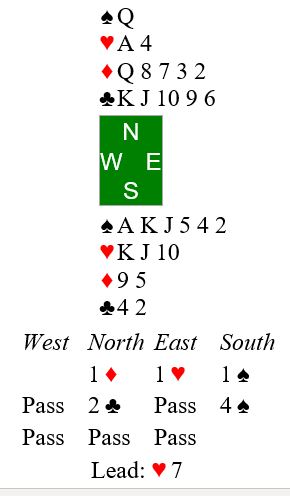
In our game it’s often hard to avoid playing by instinct. I recently made an instinctual misplay at trick one when West led the seven of hearts on this hand:

trick1


My instinct was “oh, goodie – a free finesse!” I played low from dummy. Only as I was about to lead to trick two did I contemplate how to play trumps should they break 4-1. It was too late. I needed to win trick one in dummy and cash the queen of spades. Then I can come to hand in hearts at trick two and draw trumps.

BTW, assuming I had played correctly at trick one, how are you going to play the minor suits? You know where the heart queen is, right? Yes, right!